Mechanics Migration: How Arcade Roots Reshape Strategy Layers in Free Puzzle-Driven Multiplayer Browser Sessions
Xander Ludwig · Sep 13, 2026
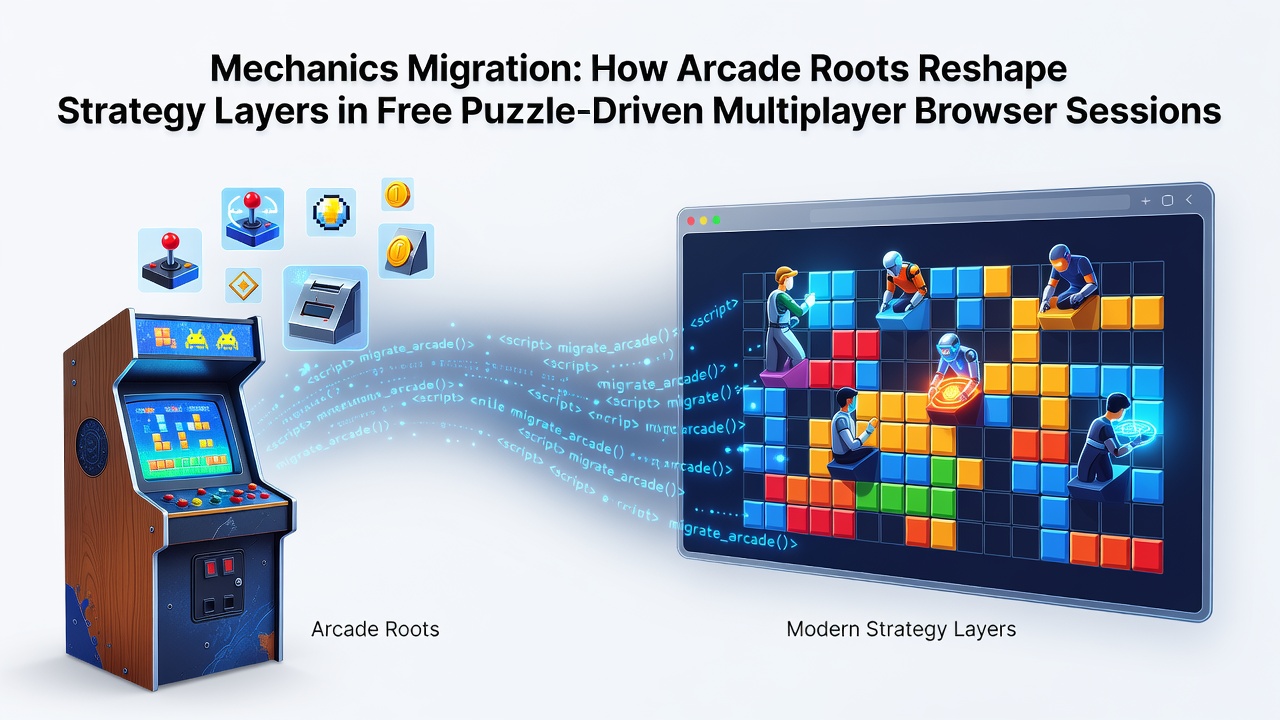
Mechanics Migration: How Arcade Roots Reshape Strategy Layers in Free Puzzle-Driven Multiplayer Browser Sessions
Arcade mechanics from the late 1970s and early 1980s established core loops around rapid pattern recognition, incremental scoring multipliers, and spatial navigation that later transferred into free browser-based multiplayer puzzle formats; these elements now underpin strategy layers where players coordinate in real time across shared grids without requiring downloads or accounts. Observers note that titles drawing from classic arcade foundations often retain fixed-tempo progression systems while adding cooperative or competitive overlays that force participants to manage resource allocation under simultaneous pressure from multiple opponents.
Historical Transfer of Core Loops
Early arcade designs emphasized survival through repeated cycles of collection and evasion, and data from industry archives shows these patterns reappear in contemporary sessions where puzzle pieces fall at predetermined intervals while opponents attempt to disrupt placement sequences. Researchers tracking browser game development have documented how power-up collection mechanics, once tied to single-player high-score chases, evolved into team-based modifiers that alter shared board states for limited durations. In September 2026 platform logs revealed increased adoption of these adapted systems across several free multiplayer environments, with session lengths extending when players combined legacy timing mechanics with new negotiation protocols for piece priority.
Scoring and Resource Dynamics
Arcade scoring hierarchies that rewarded chain reactions and efficiency carried forward into browser puzzles through point cascades that also generate temporary strategic advantages such as piece previews or opponent slowdowns. Studies from the Entertainment Software Association of Canada indicate that multiplayer implementations amplify these systems because individual actions immediately affect collective progress metrics, creating incentive structures absent from solitary arcade play. Players must therefore balance personal chain optimization against group survival thresholds, a layer that emerges directly from the original reward loops yet demands coordinated decision-making across distributed participants.
Layered Strategy in Shared Environments
Modern browser sessions integrate arcade-derived collision and boundary rules into grid-based puzzles where multiple users occupy the same digital space, forcing predictive positioning that accounts for both falling elements and rival movements. Data shows that this creates emergent tactics around denial of space and preemptive blocking, mechanics that trace back to competitive arcade cabinets but now operate without physical proximity. Those who have examined session replays observe that successful groups often pre-assign roles based on real-time resource signals rather than fixed character classes, an adaptation that preserves the reactive tempo of arcade roots while introducing distributed planning elements.
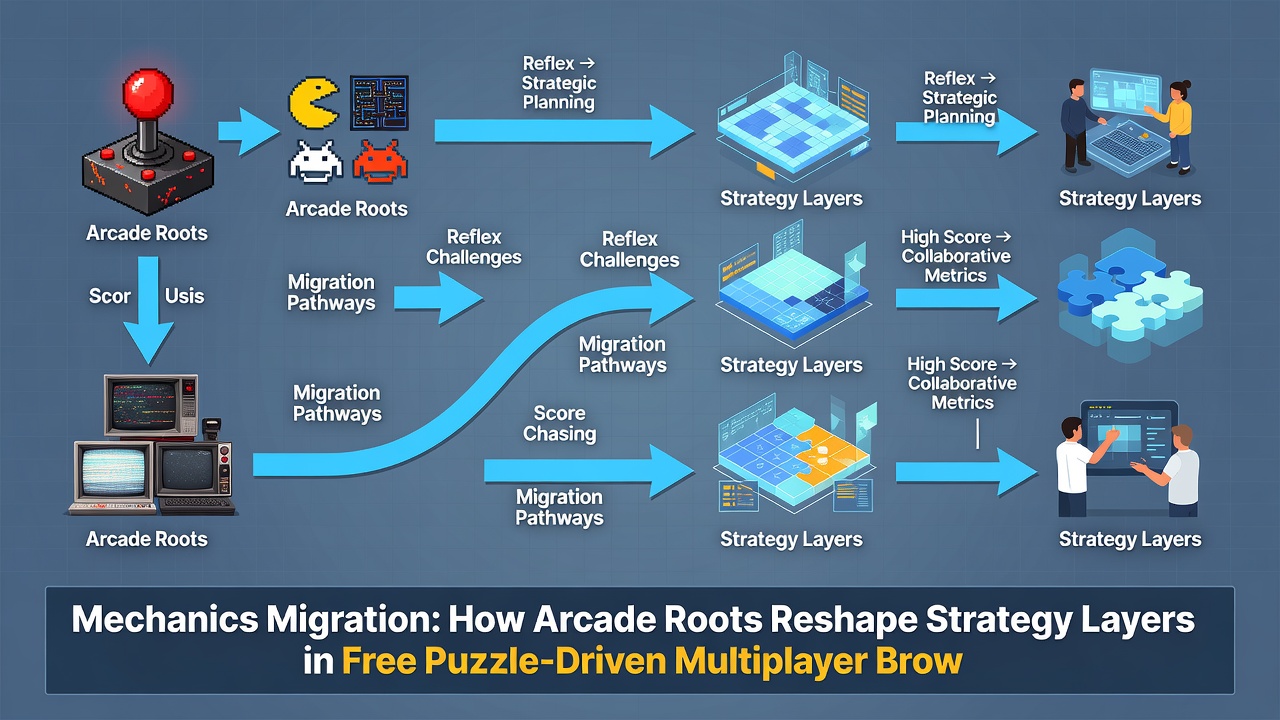
Turns out the migration also affects failure states, where arcade-style lives or continues translate into shared penalty timers that penalize the entire session rather than isolated players, thereby increasing the strategic weight of individual errors. Academic reviews from the University of Alberta Game Studies Lab highlight how such communal consequences encourage preemptive communication patterns that arcade originals never required, since single-cabinet play focused solely on personal continuation.
Platform Data and Adoption Patterns
Usage statistics compiled across free browser portals demonstrate steady growth in puzzle variants that explicitly credit arcade lineage for their core timing engines, with participation spikes correlating to updates that refine strategy overlays rather than visual refreshes alone. International Game Developers Association reports from 2025 tracked migration rates of specific mechanics such as multiplier decay and screen-clear bonuses into cooperative modes, noting that these transfers correlate with higher retention when players receive immediate visual feedback on how their choices influence group outcomes. The ball remains in developers' court to calibrate these layers so that arcade speed does not overwhelm the emerging coordination demands unique to browser-scale audiences.
Future Integration Points
Engine updates scheduled through late 2026 are expected to further embed arcade collision logic within procedural generation frameworks, allowing dynamic board shapes that still respect legacy movement constraints while supporting larger simultaneous user counts. Evidence from ongoing beta tests suggests these changes will intensify strategy depth because players must now forecast not only piece trajectories but also how shifting boundaries redistribute opponent influence zones. Researchers continue to catalog these evolutions through public telemetry, providing a record of how foundational mechanics sustain relevance across successive multiplayer formats without requiring hardware changes on the user end.
Conclusion
The documented movement of arcade-derived timing, scoring, and spatial rules into browser puzzle environments illustrates a consistent pattern of adaptation rather than replacement, where original loops gain additional strategic dimensions through shared state management and collective consequence systems. Platform metrics and academic tracking confirm that these migrations support sustained engagement in free multiplayer contexts, and continued refinements scheduled for September 2026 will likely extend the same principles into larger participant pools while preserving the reactive core that defined early implementations.