Adapting Physical Card Strategies for Virtual Action Sequences in Browser Puzzle Arenas
Noah Schmitt · Sep 27, 2026
Adapting Physical Card Strategies for Virtual Action Sequences in Browser Puzzle Arenas
Physical card games rely on hand management, sequencing plays, and anticipating opponents through limited information, and these elements translate directly into browser puzzle arenas where action sequences replace static turns. Developers map card draw probabilities to timed ability activations, while players adjust resource allocation across real-time puzzle grids. Research from the Entertainment Software Association shows browser-based multiplayer sessions reached 45 million active users in North America during 2025, with puzzle formats accounting for 28 percent of that total.
Core Mechanics from Physical Cards
Physical card strategies center on combinatorial thinking, where one move sets up subsequent options across multiple rounds. In browser environments those same principles apply to action chains that require precise timing rather than sequential reveals. Observers note that players who mastered deck cycling in physical formats often identify optimal combo windows faster when puzzle arenas introduce cooldown timers. Data from university studies at institutions in Canada indicate transfer rates above 60 percent for sequencing skills when visual cues mirror card layouts.
Timing and Resource Conversion
Virtual action sequences demand conversion of physical card concepts like mana curves or resource pacing into meter-based systems that fill during live play. Players track opportunity costs across floating elements instead of fixed card costs, and this shift preserves decision depth while adding spatial navigation. Figures from the Interactive Games and Entertainment Association in Australia reveal that sessions incorporating card-derived pacing mechanics retain users 34 percent longer than purely reflex-driven alternatives. Browser arenas implement these conversions through overlay indicators that echo card hand sizes, allowing quick mental mapping.
Pattern Recognition Across Formats
Pattern recognition remains central because physical card players already scan for synergies and counters in limited visibility. Puzzle arenas extend this scanning to moving targets and layered obstacles, yet the underlying search for repeatable sequences stays consistent. One documented case involved a group of former collectible card tournament participants who achieved top rankings in a browser puzzle title after three weeks by treating enemy spawn patterns as opponent decks. Their adaptation highlighted how bluffing mechanics evolve into feint actions that disrupt opponent timing rather than hidden information.
Interface Adjustments and Feedback Loops
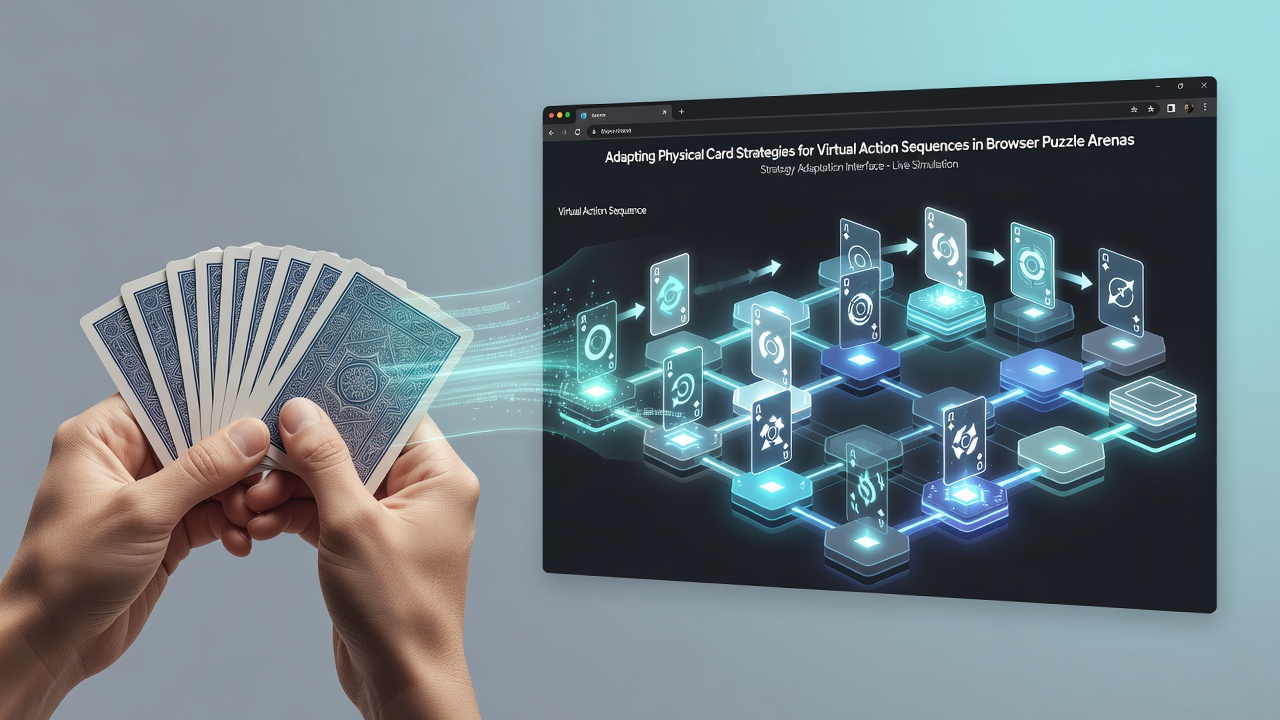
Browser interfaces replace physical card handling with drag-and-drop or hotkey inputs, yet feedback loops must replicate the tactile confirmation of placing a card. Sound cues and particle effects stand in for card flips or taps, and these substitutions maintain player awareness of state changes. Reports compiled by the European Games Developer Federation note that titles providing immediate visual confirmation of sequence completion reduce error rates by 22 percent compared with minimal feedback designs. Developers therefore embed card-like stacking animations into action execution to preserve the sense of building toward a resolution.
Multiplayer Dynamics and Information Asymmetry
Information asymmetry from hidden hands carries over when puzzle arenas obscure portions of the playfield or future opponent actions. Players apply the same inference techniques used in card games to predict sequences based on partial movement patterns. Data collected across European servers during early 2026 shows inference-based play correlating with higher win rates in team puzzle formats. September 2026 tournaments scheduled in multiple regions will test updated asymmetry tools that further mimic card draw uncertainty through randomized event triggers.
Training Transfer Methods
Training programs developed by independent studios now include modules that convert physical card drills into browser practice sessions. Participants practice resource sequencing on static grids before introducing live opponents, and metrics track accuracy improvements over repeated cycles. Academic papers from institutions in Japan document that structured transfer exercises accelerate adaptation by approximately four sessions on average. These methods focus on isolated components such as priority queuing and contingency planning before full arena integration.
Conclusion
Browser puzzle arenas continue to integrate physical card strategies through mapped mechanics, interface cues, and training protocols that preserve core decision structures. Evidence from industry associations and academic sources demonstrates measurable skill transfer when timing systems and visual feedback align with established card principles. Ongoing developments scheduled through late 2026 will further refine these connections across expanding player bases.